From Science to Solutions: The Latest Approach to Cellulite

Did you know that more than 80% of adult women have some degree of cellulite? This condition, often called orange-peel skin, is considerably less common in adult men. There is a good reason for that.
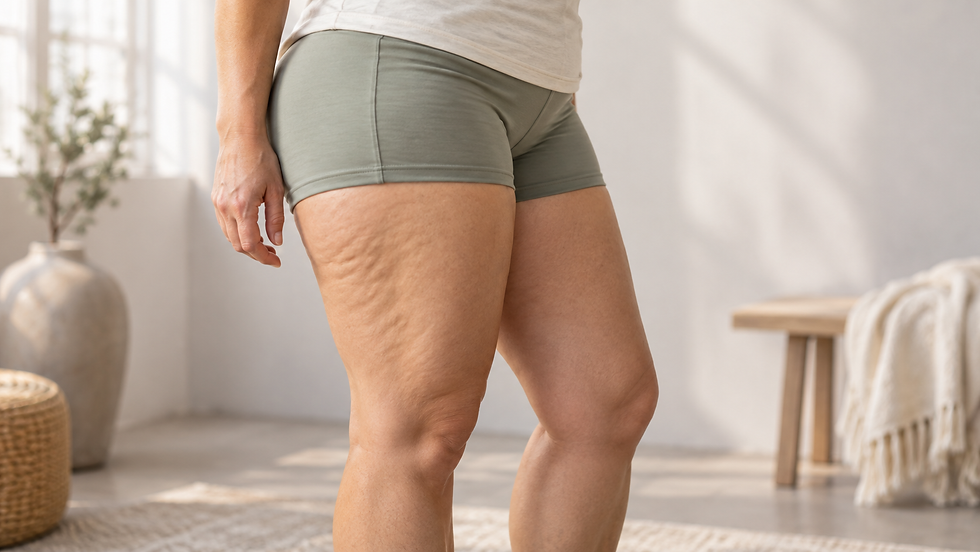
The development of cellulite is linked to several factors that have little to do with your lifestyle, such as diet and exercise. A healthy lifestyle can help reduce cellulite, but the main causes are the structure of connective tissue, hormonal influences, age and the distribution of fat beneath the skin.
Why do women have cellulite more often than men?
In women, connective tissue consists of vertical bands connecting the skin to the underlying muscles. In men, connective tissue has more of a criss-cross pattern. This is much less susceptible to the development of cellulite.
Women also generally have a higher percentage of body fat than men. Particularly around the hips, thighs and buttocks: precisely the areas where cellulite occurs most often.
The influence of age and skin elasticity
Age plays an important role in the development of cellulite. As we get older, skin elasticity decreases. This is difficult to counteract because several processes contribute to it.
Collagen and elastin production slows down. This makes the skin less firm and causes wrinkles. Collagen and elastin are proteins that are essential for the skin's firmness and elasticity.
The skin also becomes thinner as we age. This is partly because the production of new skin cells decreases and the fat layers beneath the skin become thinner. This can make the skin look looser.
Natural sebum production also decreases. The skin can become drier, which affects its elasticity too.
The loss of skin elasticity has a significant influence on how visible cellulite becomes. Firm, elastic skin makes cellulite less noticeable. When the skin loses firmness, the underlying fat cells pushing against the connective tissue become more visible.
Fortunately, there is often a lot you can do yourself to tackle cellulite. But this does not always produce the desired result, because every body is different.
If nothing helps, we are here for you with different treatments to reduce cellulite. More about those shortly.
Seven things you can do yourself
1. Eat healthily
Choose a diet rich in antioxidants, vitamin C and amino acids. These nutrients can support your skin in maintaining and increasing collagen and elastin production.
Think of citrus fruits, berries, fish, nuts and green leafy vegetables.
2. Drink enough water
We all know it: drinking enough water helps keep the skin hydrated and resilient.
This contributes to a healthy appearance and can improve skin elasticity.
3. Protect your skin from the sun
Research consistently shows that UV radiation is harmful to our skin. The sun can not only cause skin cancer, but also accelerates collagen breakdown.
A good sunscreen with a high SPF helps protect your skin.
4. Stop smoking
Smoking is not only bad for your health. It also speeds up skin ageing by accelerating the breakdown of collagen and elastin and reducing circulation.
5. Care for your skin regularly
Skincare products containing retinoids, peptides, hyaluronic acid and antioxidants can support the skin in maintaining and producing collagen and elastin.
6. Exercise regularly
Exercise improves both your overall health and your circulation. This can contribute to radiant, firmer skin.
7. Get enough sleep
A good night's sleep is often underestimated. While you sleep, your body repairs itself, including your skin.
Enough good-quality sleep can therefore also help slow the skin's ageing process.
What if you do everything and still have cellulite?
It is common to do all these things and still have noticeable cellulite.
That really isn't because you ate that piece of cheese on Friday evening or couldn't resist a chocolate bar on Sunday afternoon. Mother Nature simply isn't always on your side in this respect.
Does that sound familiar? Or would you simply like to eat what you enjoy, don't want to stop smoking and can't fit enough exercise into your busy schedule? Then various advanced treatments without surgery can offer a solution.
Professional treatments to reduce cellulite
Laser therapy
Laser treatments use specific wavelengths to break down fat cells beneath the skin's surface. This reduces the visibility of cellulite.
The laser's heat also stimulates collagen production. This contributes to improved skin elasticity and texture.
Endospheres therapy
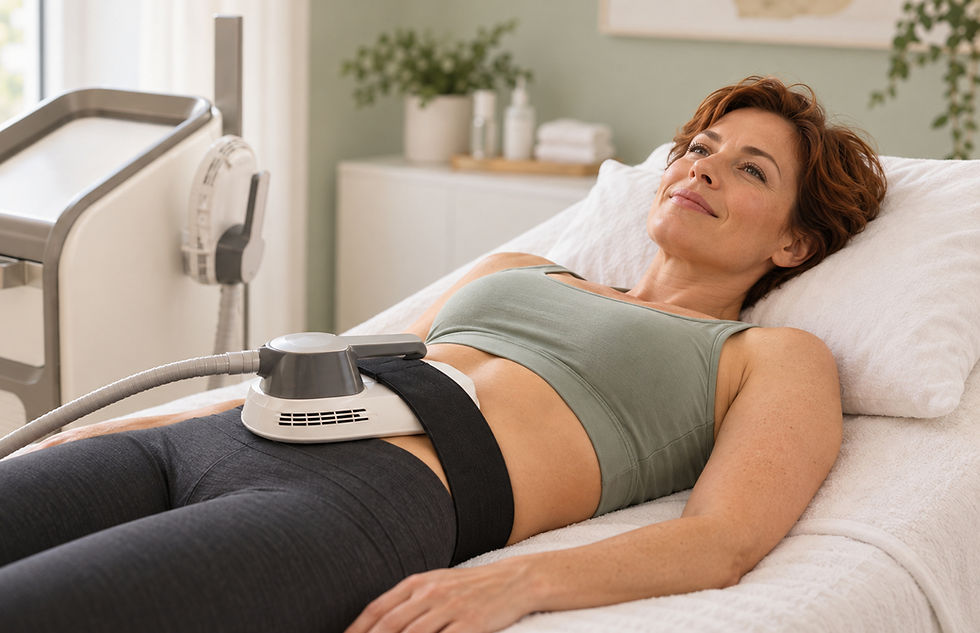
Endospheres body therapy uses microvibration and microcompression to stimulate circulation, encourage lymphatic drainage and smooth the connective tissue responsible for the uneven skin texture.
The treatment not only targets cellulite, but also improves the appearance and firmness of the skin.
What is the difference between laser therapy and Endospheres?
Laser therapy and Endospheres are both treatments for improving skin and reducing cellulite. They work in different ways and each has its own considerations.
The treatment that suits you best depends, among other things, on the degree of cellulite, your skin type and what you want to achieve. We will gladly advise you on the most effective approach for your skin.
Feature | Laser therapy | Endospheres therapy |
Technology | Light energy at specific wavelengths. | Mechanical microvibration and microcompression. |
How it works | Targets fat cells and stimulates collagen production through heat. | Stimulates circulation and lymphatic drainage and acts on connective tissue. |
Aim | Less visible cellulite and improved skin elasticity and texture. | Less visible cellulite and improved skin texture and firmness. |
Approach | Treatment tailored to the skin and desired result. | Treatment tailored to the areas and desired result. |
Cellulite or cellulitis: is there a difference?
Absolutely!
Cellulite is the correct name for the uneven skin texture often described as orange-peel skin.
Cellulitis is something different: inflammation of the subcutaneous connective tissue, usually caused by a bacterial infection. This infection often occurs on the legs and is accompanied by pain and fever.
An important difference, then.
Personal attention at Beauty & Mind in Amsterdam
I understand that taking the step towards professional treatment can feel significant, especially when you have doubts or feel insecure about your skin.
At Beauty & Mind in Amsterdam, you choose more than a treatment. You receive personal advice in an environment where you feel understood and valued.
We believe everyone deserves natural beauty. That includes you.
Feel free to contact us to discuss the options for your skin. Who knows, perhaps you will soon be walking confidently along a tropical beach with smooth skin.
Skin Therapist

Comments