From Red Patches to Radiant Skin: Understanding Rosacea

A good friend of mine has rosacea. When I see her, I notice the red patches on her cheeks, nose and sometimes even her forehead. Her symptoms flare up particularly when she is stressed. Yet skincare is not always a priority for her. She usually brushes aside my advice to use a gentle cleanser and a nourishing cream.
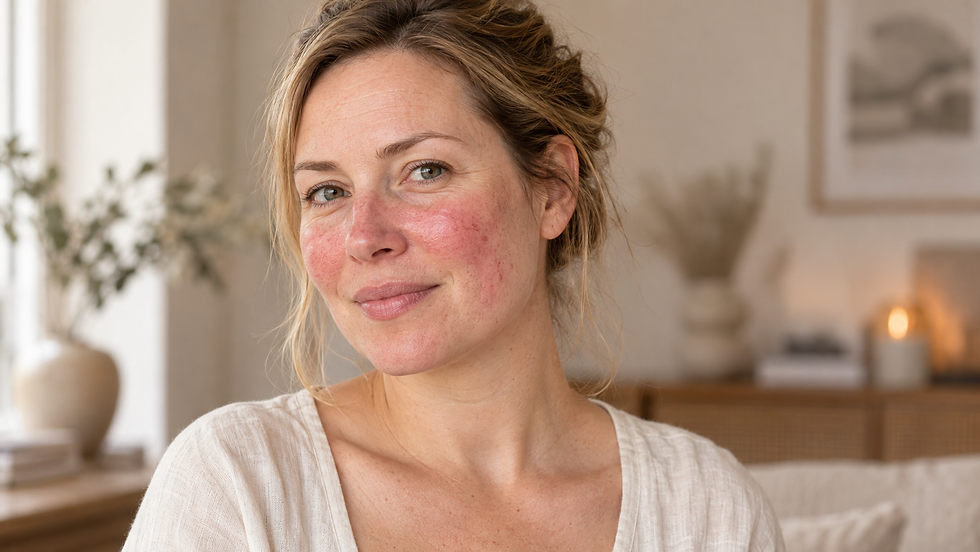
Perhaps this sounds familiar: redness that keeps coming back, skin that reacts easily or spots that just will not go away. Rosacea can be frustrating and affect how you feel. Fortunately, there are ways to reduce the symptoms. In this blog, you will learn what rosacea is, which factors can trigger a flare-up and what role skincare and treatments can play.
What is rosacea?
Rosacea is a chronic skin condition that mainly affects the face. You may experience flushing, persistent redness, visible blood vessels and a burning or stinging sensation. Bumps, spots and eye symptoms can also occur. Symptoms vary from person to person and can change over time. Redness is sometimes less noticeable on darker skin.
The difference between rosacea and acne rosacea
The term 'acne rosacea' is still sometimes used for rosacea with bumps and spots. This is not a separate condition or ordinary acne. Its medical name is papulopustular rosacea.
Although the spots may resemble acne, rosacea requires a different approach. Blackheads, for example, are more typical of acne. Avoid using an intensive acne treatment on sensitive, red skin without first checking whether it is suitable. If you are unsure, your GP can assess what is happening.
What causes rosacea?
The exact cause of rosacea is not yet fully understood. Hereditary factors and processes involving inflammation and the skin's immune response may play a role. Rosacea often affects adults, but it can develop at different ages.
It is important to distinguish between the cause of rosacea and factors that worsen its symptoms. Alcohol or spicy food can trigger a flare-up in some people. This does not mean that someone develops rosacea because of an unhealthy lifestyle or that it is their fault.
Which factors can make symptoms worse?
Common triggers include sunlight, heat, cold, hot drinks, alcohol, spicy food and stress. Skincare that irritates your skin can also trigger symptoms. Not everyone reacts to the same factors. Keeping track of when your skin becomes more unsettled can help you identify which triggers matter to you.
How rosacea can affect your confidence
In my practice, I notice that skin problems are about more than what you see in the mirror. People with rosacea may feel insecure, frustrated or embarrassed. Sometimes they avoid social situations because they worry about comments about their skin.
The recurring nature of the symptoms can also be discouraging. You take care of your skin, yet the redness returns. These feelings deserve attention. A clear treatment plan and realistic expectations can help you regain a sense of control. You do not need to apologise for your skin.
What can you do about rosacea?
A good approach starts with recognising your symptoms. Have persistent redness or recurring spots assessed by your GP, especially if you have not yet been diagnosed. Depending on your symptoms, a doctor may prescribe a cream, gel or medication. Skincare and an appropriate light or laser treatment may form part of your treatment plan.
Care for your skin gently
Keep your routine simple: use a gentle cleanser, a moisturising cream that your skin tolerates well and daily broad-spectrum sunscreen with at least SPF 30. Avoid harsh scrubbing and products that burn or sting. Introduce new products one at a time so you can see how your skin responds.
A serum can add something to your skincare routine, but it is no guarantee against rosacea. Choosing products that suit your sensitive skin matters more than having an extensive routine. Ask for advice if you are unsure about ingredients or combining products with prescribed medication.
IPL M22 for redness and visible vessels
At Beauty & Mind in Amsterdam, we offer the IPL M22 facial treatment for concerns including redness, rosacea and visible facial vessels. IPL stands for Intense Pulsed Light. It uses pulses of light and is a different technology from a laser.
When treating vessels, light energy is absorbed by haemoglobin in the blood vessels and converted into heat. This can make superficial vessels and redness less visible. The settings are tailored to your skin and the treatment area. IPL does not automatically treat every symptom of rosacea; bumps, spots and eye symptoms may require a different approach.
How it differs from laser resurfacing
The ResurFX M22 facial treatment focuses primarily on skin texture, fine lines and acne scars. This fractional laser stimulates collagen production. Its CoolScan system distributes the treatment points to limit heat build-up.
ResurFX therefore has a different purpose from IPL for superficial redness and vessels. With rosacea, we first assess which symptoms need attention. A combination is considered only if it suits your skin and treatment goals.
What about Icoone?
Beauty & Mind also offers the Icoone facial treatment, which focuses on concerns such as facial contours and skin quality. This has a different treatment goal from reducing rosacea symptoms. If you have rosacea and would also like a facial treatment, first discuss whether it is suitable for your sensitive skin.
What can you expect from a rosacea treatment?
The results depend on your symptoms, your skin and the chosen technique. Several sessions may be needed. A light or laser treatment can reduce redness or visible vessels, but it does not cure rosacea. Symptoms can return, and maintenance may be needed.
During treatment, you may feel warmth or brief stinging sensations. Temporary redness and swelling can occur; pigment changes or other complications are also possible. During your consultation, we discuss the expected effects, possible side effects and aftercare. Tell us which medication you take and whether your skin has recently tanned in the sun.
Find an approach that suits your skin
At Beauty & Mind, we look at your skin, your symptoms and what you would like to achieve. We take the time to explain which treatment suits your skin goals and what you can expect. Where necessary, we recommend consulting your GP or dermatologist first.
Would you like to know more about treatment for redness and visible vessels? Explore IPL M22 at Beauty & Mind and discover how we work.
Tatiana Leskova
Beauty & Mind Amsterdam
Frequently asked questions about rosacea
What are the most common triggers?
Sunlight, heat, cold, hot drinks, alcohol, spicy food and stress can worsen symptoms. Irritating skincare products can also play a role. The triggers that affect you vary from person to person.
Is acne rosacea the same as acne?
No. 'Acne rosacea' is an older term for rosacea with bumps and spots. Ordinary acne is a different condition and may require a different treatment.
What role does your lifestyle play?
Recognising your personal triggers can sometimes help limit flare-ups. Adjusting your lifestyle does not guarantee that symptoms will stay away. Rosacea is not your fault.
Which treatment can help with redness?
IPL or a suitable vascular laser can reduce persistent redness and visible vessels. The right approach depends on your skin and symptoms. Medication may be needed for inflammation.
Can rosacea disappear completely?
Rosacea is chronic. Treatment can reduce symptoms and sometimes keep them calm for a long time, but a permanent cure cannot be promised.
When should you contact your GP?
Contact your GP if you develop eye symptoms. Call your GP or out-of-hours medical service immediately if you have a red eye with pain, sensitivity to light or reduced vision.
Comments